
For decades, HealthyNurse® Dixie Mullins, RN, Care Manager for Humana, tried everything she could to achieve a healthy weight.
“I’ve always been a little heavyset,” she says. “When I was in high school, I was told that I’d look so much better if I just lost 10 pounds. So, I exercised and ate boiled eggs and watermelon for dinner. I lost 10 pounds, only to be told to lose 10 more. It was never enough.”
That experience shaped Mullins’ relationship with the numbers on the scale for years to come.
The Impact of Life Changes and Circumstances
When Mullins got married at age 20, she and her then-husband moved away from her family and friends, leaving her feeling isolated.
“I gained 60 pounds in 6 months, and never lost it,” she says. “By age 27, after having 2 children, I weighed 230 pounds.” She had gained approximately 80 pounds since graduating from high school.
Unsuccessful Attempts to Lose Weight
Mullins did not ignore her weight gain. “Starting at age 18, I tried every program on the market,” she says. “I tried WeightWatchers and Nutrisystem. I took fen-phen (fenfluramine/phentermine) before it was banned. I joined the gym. Nothing helped for very long.”
When Mullins heard about bariatric (weight loss) surgery, she was immediately interested. “I wanted to try surgery, but it was still very new at the time,” she recalls. “My friends and family told me it was too dangerous, so I held off.”
Meanwhile, her weight continued to creep up. “After I hit 350 pounds, I stopped weighing myself,” she says. “When I went to the doctor’s office, I told them not to weigh me. I was ashamed and didn’t want to know how heavy I was.”
Brief Success, Then a Family Crisis
Mullins refused to give up. She kept working towards a healthy weight, and by 2020, she had lost 75 pounds.
“My dad was diagnosed with cancer that year,” she recalls. “I moved in with him and his wife to help take care of him.”
To anyone else on a similar weight loss journey, keep a positive mindset, take baby steps, and never give up on yourself.
While juggling a full-time nursing job and caring for her father, Mullins admits her focus on nutrition took a backseat. “I would nap after work and then sit up with my dad at night,” she says. “I stopped watching what I was eating.”
Mullins’ weight started to climb again.
A New Love and New Challenges
Divorced from her first husband, Mullins was navigating the challenges of caring for a critically ill parent as a single mother.
“It was during this challenging time that I found the love of my life, my current husband,” she says. “He’s a retired nurse, and he would come over and help me take care of my dad. He’s the best thing since sliced bread.”
One of her husband’s gestures of affection was to gift Mullins a bag of M&Ms every day. “It was wonderful, but a bag of M&Ms a day, on top of eating poorly, just added to my weight issues,” she says.
Over the course of 18 months, Mullins gained 100 pounds. “I was miserable,” she recalls. “I was depressed, and I’m usually a very positive person. But by this point, I struggled to get out of bed. I struggled to breathe when I walked. I knew I needed to do something.”
Weight Loss Surgery Changes Everything
In April of 2024, Mullins had vertical sleeve gastrectomy (VSG) surgery. During a VSG procedure, a bariatric surgeon removes a large portion of your stomach, leaving a pouch the size of a banana. By reducing the size of your stomach, VSG limits how much food you can eat and helps you feel full faster.
“The surgery was really easy for me,” she says. “I did not feel pain or experience complications during recovery. I did everything the bariatrics team told me to do, to the letter. I think that helped me have such a smooth surgery and recovery.”
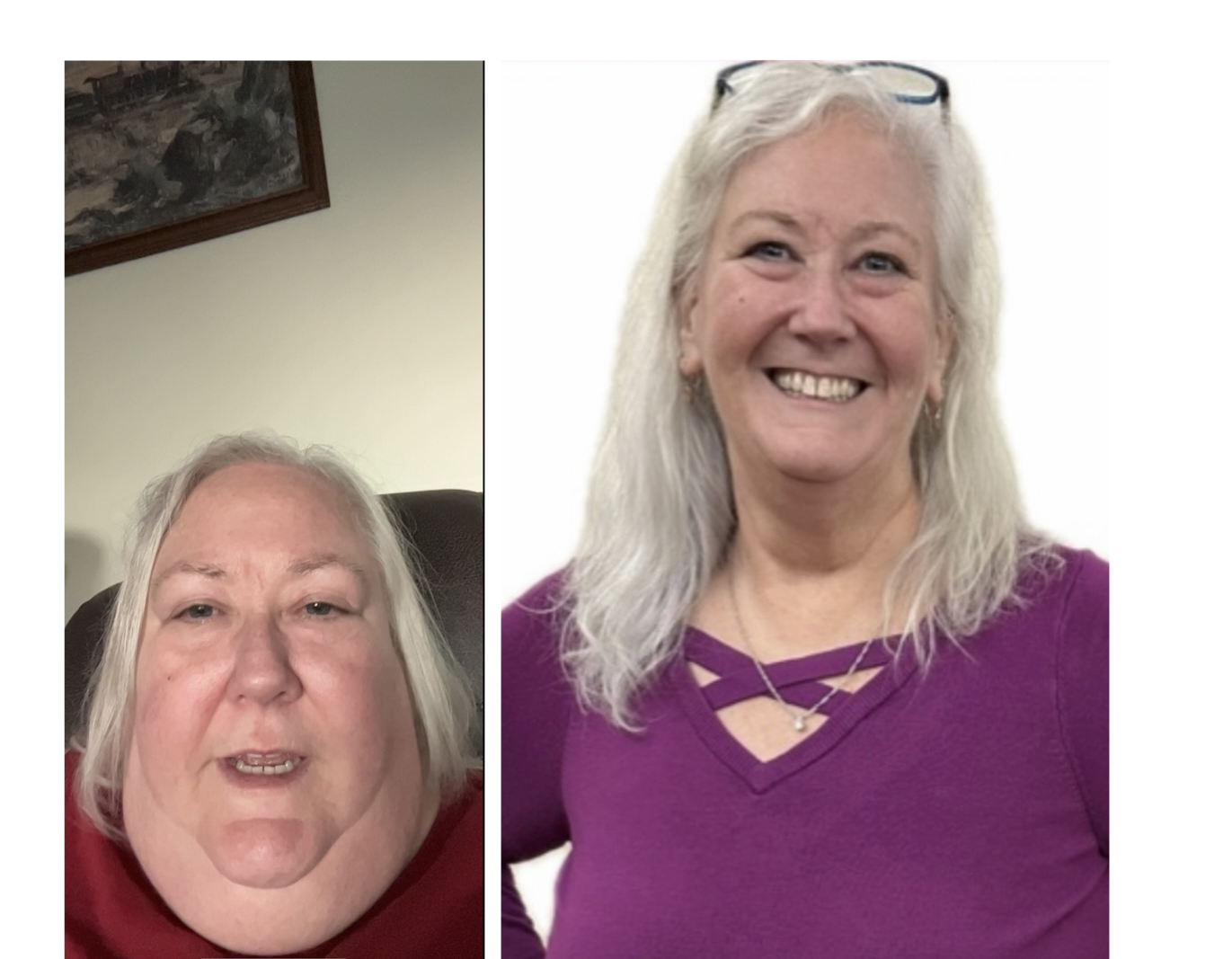
As of today, Mullins has lost 126 pounds since her surgery, and her journey isn’t over.
Rethinking Food and Eating
According to Mullins, surgery is not a “one and done” solution. “You have to change the way you eat and the way you think about food,” she says. “One of the first things I learned was how to notice my body’s cues that tell me I’m full.”
Fullness cues after weight loss surgery may be different for each person, but they can include:
- Hiccups
- Indigestion
- Pressure
- Runny nose
- Sneezing
- Tightness in your stomach
Mullins discovered that she sneezes when she’s full, so she tries to stop eating before the sneezing begins.
“Before surgery, I would just keep eating because food tasted good,” she says. “Now, I slow down and chew my food carefully. That helps me notice when my stomach is full.”
I remember thinking there was no way I’d ever be able to walk 10,000 steps! I was averaging 800 steps a day and thought that was an accomplishment.
New Milestones and New Goals
Before Mullins had bariatric surgery, she felt out of breath after walking a short distance. After surgery, she began walking 2 miles every morning before work.
“I remember thinking there was no way I’d ever be able to walk 10,000 steps,” she says. “I was averaging 800 steps a day and thought that was an accomplishment.”
Now, Mullins has set a goal to run a 5k race next September.
Enjoying Life With Grandchildren
One of the most rewarding aspects of life after surgery is Mullins’ ability to play with her grandchildren.
“I can get on the floor with them and play,” she says. “They just love that I can have tea parties and sit with them. It sounds like a simple thing, but I couldn’t do it before my surgery.”
Words of Encouragement
To anyone else on a similar weight loss journey, Mullins says, “Keep a positive mindset, take baby steps, and never give up on yourself.”
Dixie Mullins, RN, works for Humana.